
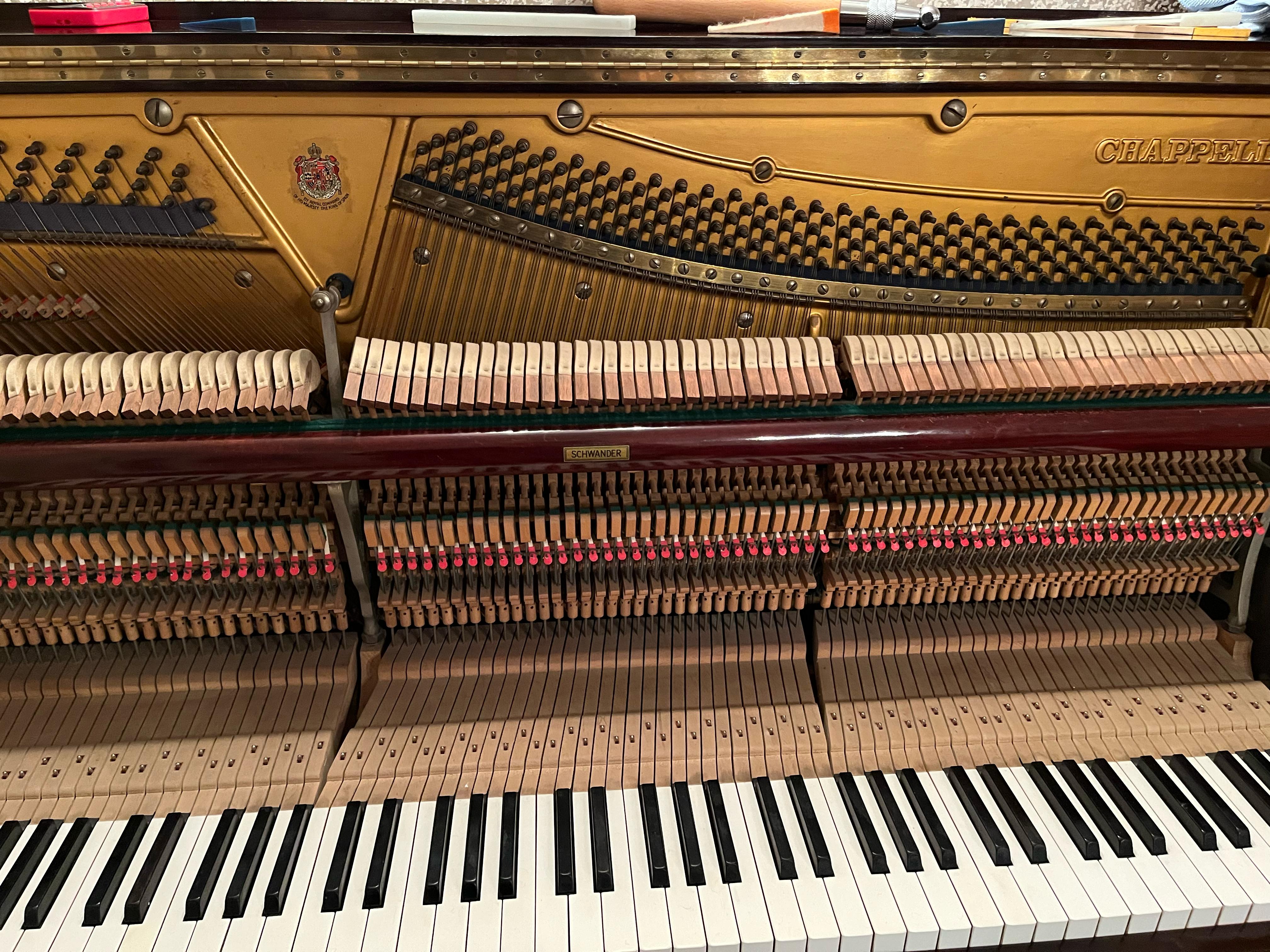
One of the most common questions I hear from piano owners across South and South-West London is simple: “How often should I tune my piano?”
The honest answer is: more often than most people realise.
The Standard Recommendation: Twice a Year
Most piano manufacturers — including Steinway — recommend tuning your piano at least twice a year. This applies to the majority of home pianos that are played regularly. The reason comes down to physics: piano strings are under enormous tension, and they gradually drift out of pitch over time, whether the piano is played or not.
In London, central heating plays a particularly significant role. As the heating season begins in autumn, the drop in humidity causes the soundboard to contract, pulling the pitch flat. Come spring and the wetter months, when humidity rises again, the pitch shifts once more. In my experience, these seasonal swings are especially noticeable in London homes — the shift from a dry, heated winter to a damper spring can move a piano’s pitch quite significantly. Tuning in autumn and spring works well for most households here.
The Reality: Many Pianos Go Much Longer Without Tuning
In my work across South London, one of the most common situations I encounter is pianos that haven’t been tuned for well over a year — sometimes several years. The owners often didn’t realise how long it had been, or assumed the piano sounded “fine.”
When a piano drifts this far from concert pitch (A440), a standard tuning is no longer sufficient. A pitch raise is needed first — a process that gradually brings the overall string tension back up to the correct level before a fine tuning can be carried out. This takes more time and costs slightly more than a regular service, but it’s a necessary step to restore the piano properly.
The good news is that once a piano is back on pitch and maintained regularly, it holds its tuning much more reliably.
When You May Need More Frequent Tuning
Some situations call for tuning more than twice a year:
- New pianos — A brand new piano typically needs tuning three to four times in its first year as the strings stretch and stabilise.
- Recently moved pianos — Moving a piano disrupts the tension across all strings. Allow the instrument to settle for at least two weeks before tuning after a move.
- Exam or performance preparation — Students preparing for ABRSM or Trinity exams benefit from a tuning shortly before the event. I regularly tune for students and teachers ahead of important assessments.
- Pianos near heat sources or windows — If your piano is near a radiator, in a conservatory, or in a room with unstable temperatures, it may drift faster and need more attention.
How Do I Know If My Piano Needs Tuning?
You don’t always need to wait until something sounds obviously wrong. Some signs to listen for:
- Notes sound dull, harsh, or “wobbly”
- Chords feel uncomfortable even when played correctly
- The piano sounds noticeably different from recordings or other instruments
That said, pianos can drift gradually without you noticing — especially if you play every day. A regular tuning schedule is the best way to keep your ear calibrated and your instrument at its best.
A Quick Reference Guide
- Played regularly at home → twice a year
- New piano → three to four times in the first year
- Preparing for exams or performances → before each major event
- Not tuned for over a year → pitch raise + tuning
Book a Piano Tuning in South London
I provide professional piano tuning home visits across Sutton, Kingston upon Thames, Wimbledon, Richmond, Croydon, and Bromley. Whether your piano is due for its regular service or hasn’t been tuned in a while, I’m happy to help — no judgement on how long it’s been.